Wednesday, June 19, 2013

Example 3: Pinnacle Vodka

Pinnacle was started in 2003 by White Rock Distilleries.  It is best known for its 31 flavors, including whipped cream, cotton candy and kiwi strawberry.  Pinnacle is distilled in France and shipped to the US where it is flavored and bottled.


Since being launched, Pinnacle has gone from little-known spirit to a nationwide brand. White Rock executives attribute their success to word-of-mouth marketing and the popularity of Pinnacle's  whipped cream-flavored vodka.
"In the second half of last year the brand exploded," White Rock Chief Executive Officer Paul Coulombe said. "Orders kept flying in."
Everybody was talking about it. Everyone who tasted it would tell 100 of their (Facebook) friends," Coulombe said.
John Suczynski, White Rock's chief financial officer and chief operations officer, said homemade YouTube videos also spread the word.
"There are people doing commercials for us," he said.
White Rock sold roughly 1.8 million Pinnacle cases by the end of 2011.
By comparison, Diageo, a White Rock competitor, sold 24.3 million cases of the Smirnoff brand in 2010, according to Diageo's annual report.

White Rock is not a liquor distiller. The company buys liquor in bulk from distillers in Europe, Scotland, Mexico, the Virgin Islands and the United States.
The spirits are blended and bottled at White Rock's Lewiston plant.

By 2012 it was the fourth largest imported vodka brand in the US and selling approximately 3 million cases a year.  Jim Beam acquired Pinnacle in April of that year for over $600 million.


Source:  "The Bottom Line:  White Rock Reaches a Pinnacle", Portland Press Herald, March 6, 2011.

Sunday, June 16, 2013

Saturday, June 15, 2013

Due Diligence


The wheat for our vodka is grown right next door

As you might imagine, I've been talking about our vodka brand with friends.  One man I recently spoke with told me of his experience with a new vodka brand.  He was hired by someone who wanted to launch a Polish vodka in the US.  My friend was sent to Poland, to check out the distillery.  What he found was a factory -- half devoted to vodka distilling and half to producing diesel fuel.  Apparently there was cross contamination and sometimes the vodka had a distinctly diesel flavor.  Moral of his story:  always do your due diligence.

And so we have.  We've seen these views with our very eyes and know our distiller produces superior vodka from local grains, grains grown, in fact, right next to the distillery.  No diesel fuel in sight.

Distillery shadow on their wheat field


Wednesday, June 12, 2013

70 Proof


I'm not posting details of our product on this blog until we actually launch, but I can talk about one aspect of our vodka:  the proof.  Most vodkas are 80 proof.  Ours will be slightly lower, at 70 proof.

Why?  A few reasons.  One, it makes for an even smoother taste.

Two, my friends don't drink to get trashed, and the slightly lower alcohol content allows them to sip (slightly) more.  Not that the content is low alcohol by any means (and in fact some brand with a hard partying image are 70 proof, notably Captain Morgan and Jagermeister).

Three, it is slightly lower in calories.  A shot of 70 proof vodka has about 85 calories whereas a shot of 80 proof vodka has 100 calories.

Fourth, the excise tax on each bottle is slightly lower.

The bottom line:  We made the decision because we believe a 70 proof vodka is a smoother, easier sipping vodka, 


Sources:  "Spirits: Understanding Alcohol Proof," The Washington Post, July14, 2010.  "How Many Calories Are In Vodka?" Fitnessforweightloss.com


Tuesday, June 11, 2013

Sunday, June 9, 2013

Why Women?

Because women make 70% of all liquor purchases
(and middle aged women account for 62% of vodka purchases made in stores)

Women are closing the drinking gap, consuming more alcohol at restaurants while making most of the purchasing  decisions for at-home consumption. That has alcohol producers and entrepreneurs trying to deliver what they think women want.

"The fact of the matter is that women in this country constitute the majority of vodka consumers, and they've been ignored,'' said Adam Kamenstein, chief executive of privately-held Voli Spirits LLC, which a year ago rolled out Voli Light vodkas with the tagline "stay sexy.'' 

Women's drinking patterns have been shifting for at least 20 years, says  Gary Stibel, founder of the New England Consulting Group. Stibel said that women make 65 percent to 70 percent of the alcohol-purchasing decisions for at-home consumption.
"I buy the stuff. This is how it's always been,'' said Sharon Wolfson, 34, outside a Highland Park beverage store. She said her husband long ago ceded liquor 
 to her. Her purchases Friday for a party included whiskey, bourbon, vodka and beer.
Low-calorie beverages did not make the cut.
"I'm not that kind of a girl," Wolfson said. "I saw an entire women's section in there, but it's not for me. I don't think about calories while I'm drinking."
After decades of advertising that may have alienated women, at least in part by depicting women as sex objects, alcohol marketers are looking for ways to connect with them.
"Spirits companies oftentimes are not as adept at appealing to women," [ya think?] acknowledged Bill Newlands, president of Beam North America.


Source:  "Alcohol Marketers Looking For What Women Want," Chicago Tribune, March 28, 2011.

Friday, June 7, 2013

Riding in a grassy sea

Kaila Tiedemann riding Woody on the farm
Time for a pretty picture after yesterday's ugliness.

Thursday, June 6, 2013

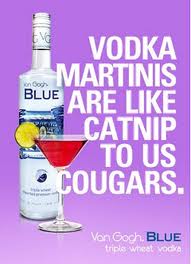
Alcohol Marketing to Women: We can do better than this!

 I think I'll just let the ads speak for themselves.


And most infamously of all:


These ads don't speak to me, or my friends.  We don't consider ourselves cougars, or think our partners are "whipped so good" or (in my case anyway!) thrill to a clean house.  

Three Meadows vodka is created by a woman, for women like my friends and I -- with a sense of humor, sophistication, fun -- and respect.

There's a reason marketers are targeting women and I'll write about that in another post.  

Wednesday, June 5, 2013

Example 2: SkinnyGirl Margaritas


Skinnygirl was formed in 2009 by Bethenny Frankel and her partner David Kanbar.  After 12 months of development, the premixed margarita was released on the East Coast in 2010.  By that summer, the company could not keep up with demand and the first production run was sold out.  Having sold 100,000 cases the first year, Frankel and Kanbar sold the brand to Beam, Inc. for $120 million in 2011. since then, Skinnygirl's sales have grown by 486%.

With Skinnygirl's success, other "light" or reduced calorie drinks have been launched.  With a tag line of "Stay Sexy", Voli Light Vodka is one.


Voli is aimed at women, but how is that image above any different than marketing to men?  Marketers know women are a large segment and are trying to reach them . . . but seldom do they get it right.  Next time I'll write about the campaigns I've found that are directed to women and you'll see what I mean.

Sources: "Skinnygirl Margarita Deal Shows Women's Buying Power," The Los Angeles Times, March 30, 2011;  "How Bethenny Frankel Used Her Reality Show to Make $120 Million," The Hollywood Reporter, April 21, 2011.

Tuesday, June 4, 2013

More Meadows!


The meadows in back of my house are the inspiration for our vodka.  We are in a rural valley made up of 18th century farms whose field boundaries have not changed in 200 years.

Monday, June 3, 2013

Example 1: Hpnotiq

There are a handful of giant liquor companies that dominate the market.  These companies are not great at starting new, small brands.  So they don't -- they let others do that, and see what becomes (somewhat) successful. Then they swoop in and buy the brand, aiming to scale it up with their distribution clout and advertising and promotional resources.  There are many examples of this, and I'll write about some on the blog.  Here's the first:  Hpnotiq.


Twelve years ago Raphael Yakoby, a college dropout with no business experience, had an idea: He'd create the first blue liqueur. Ignoring naysayers who told him nobody would drink a blue beverage, he sold his apartment, moved back into his parents' Long Island home and got to work. A year later Hpnotiq, a blend of vodka, cognac and fruit juices, was a nightclub staple, and he went on to sell the brand for a reported $50 million.

Mr. Yakoby has now launched another brand, Nuvo, that I may write about later.  Here's a great interview with him about both brands, and how he launched them.


Source:  "Dream Job:  Raphael Yakoby", NY Post, May 21, 2007

Saturday, June 1, 2013

Bottles

We've been giving a lot of thought to which bottle to use.   The first question is:  stock or custom?  Custom is obviously nicer, but perhaps obviously, much more expensive.  Unless you are ordering tens of thousands of bottles, it costs $20,000 - $50,000 for a custom mold.  It is a bit cheaper if you go with bottles made in China, but for several reasons we've opted for North American bottles.

These photos are of some stock bottles.  We are leaning towards using stock; and have a pretty good idea of how we want the bottle to look (hint: it is none of these bottles).  We met with a wonderful bottle broker, and have had conversations with a few manufacturers directly.


Another factor is whether the bottle comes in different sizes.  Bars and restaurants prefer to buy liter sized bottles, but the standard size sold in stores is 750 ml  Not many stock bottles come in both sizes.

We've narrowed our search down and also have developed a prototype of our bottle (we are changing the bottle in a way).   Virtually nothing, including the bottle design, is set in stone for us at this stage, but we have a pretty good idea of what we want and where to get it.